
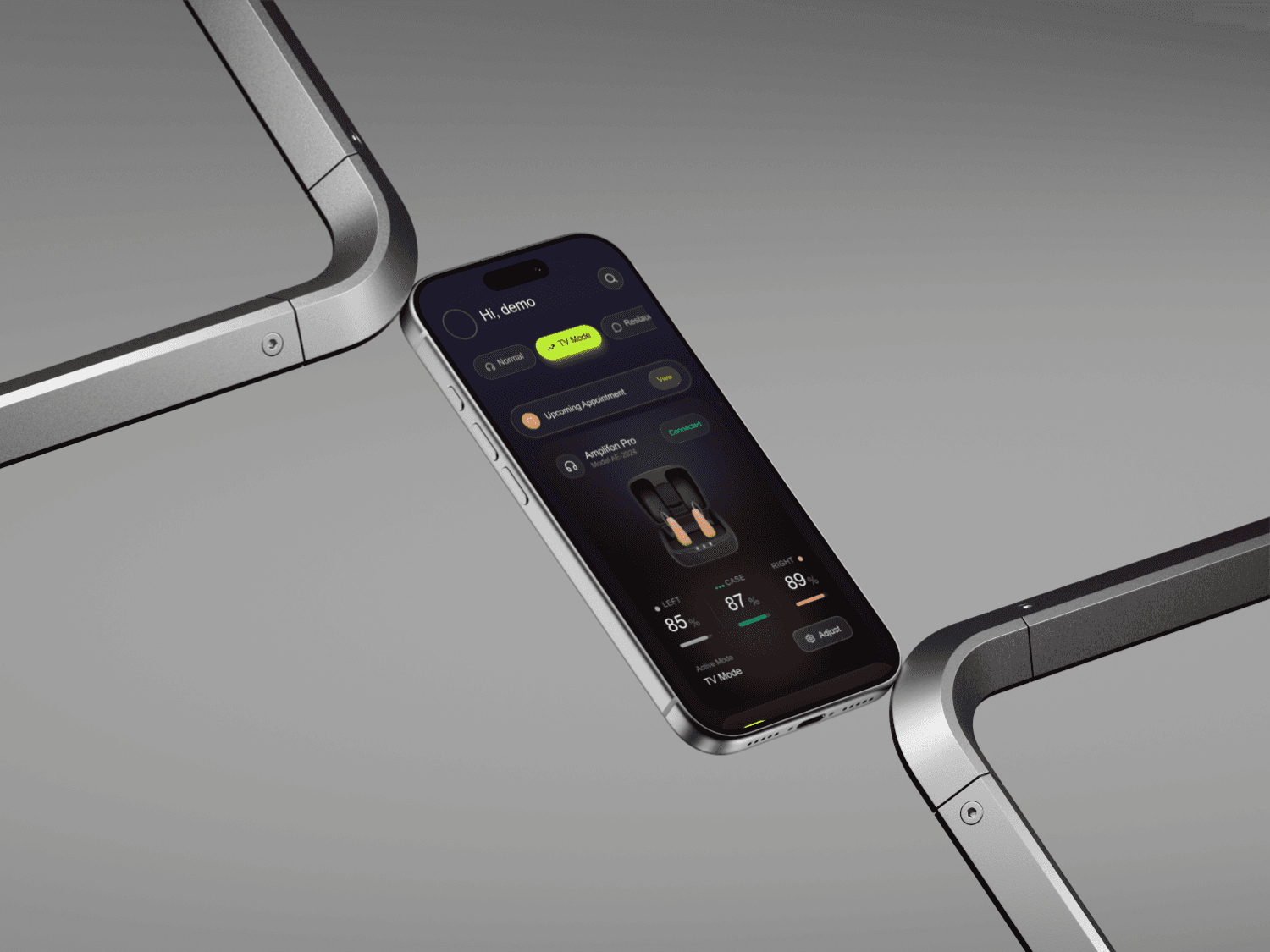
What Is Amplifon AI
Project Overview
Amplifon is the global leader in hearing-care solutions, operating thousands of clinics worldwide. Their hearing-aid journey spans clinical interviews, device fitting, trial weeks, adaptation, calibration, and long-term care.
Their problem was systemic:
the admin side was producing unreliable data, and the user side lacked emotional and empathic guidance.
Both failures created drop-offs, poor personalization, and unnecessary clinic visits.
I redesigned the entire ecosystem into a two-sided, AI-powered platform:
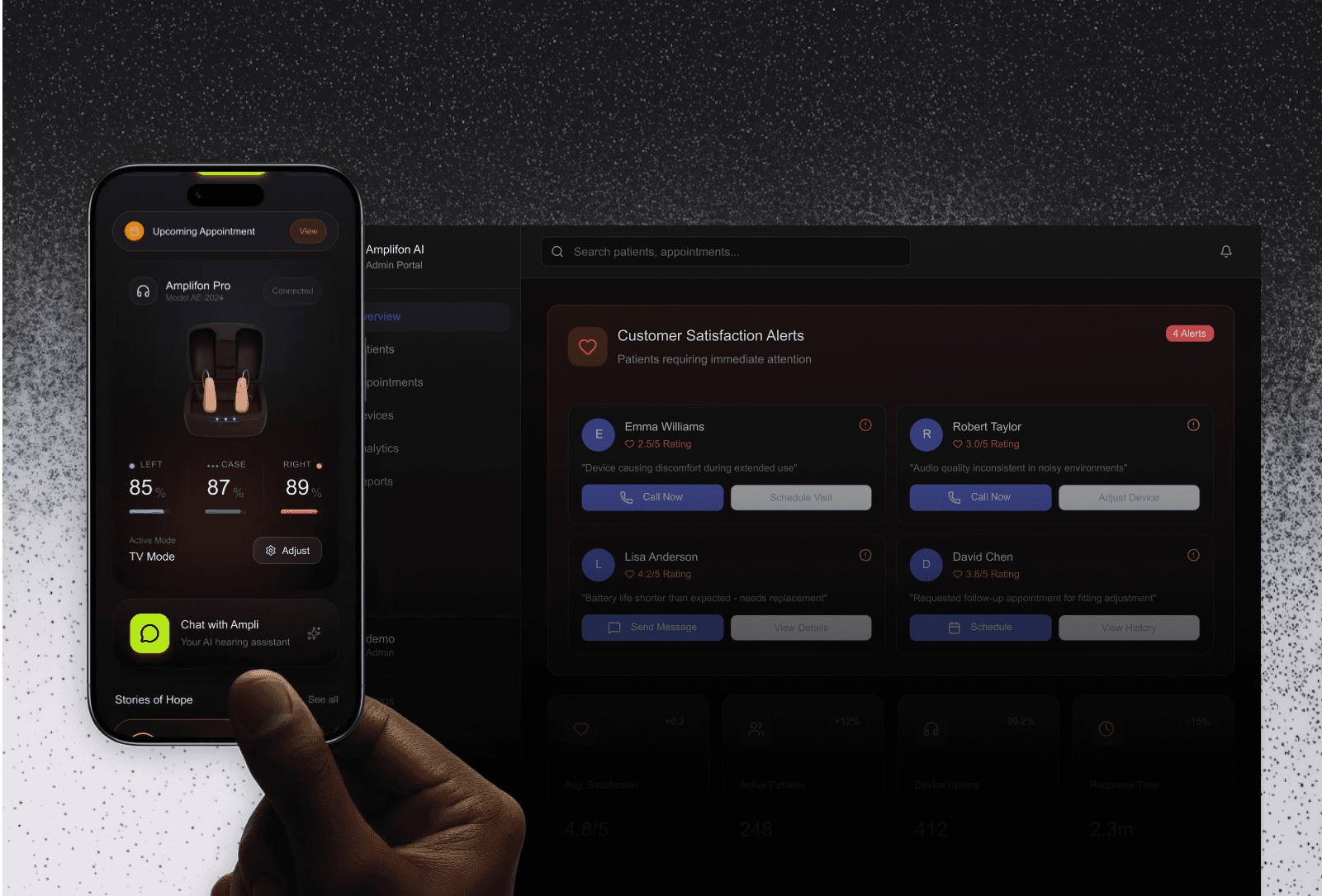
Admin Side: AI-guided interview + structured data system that eliminates human error and builds a reusable personalization backbone.
User Side: A voice-first companion that supports patients through adaptation, calibration, personalization, and daily emotional guidance.
The result is a unified, scalable system that improves data quality, reduces operational friction, and delivers a more supportive, human experience.
01 — Core challenges
Failure 01 · Admin
Business & clinical constraints
Medical decisions rely on intake data that is currently incomplete, inconsistent, and unstructured.
Clinicians face time constraints, liability pressure, and cognitive overload.
Regulatory requirements demand accuracy and auditability.
Result
Poor tuning
Repeated clinic visits
Personalization that collapses after short time
Failure 02 · User
Behavioral reality
How long users delay hearing aids, due to fear, stigma, and emotional denial.
During trial week and adaptation
New sounds are overwhelming
Support is minimal
App UX is too complex for elderly and young users
Elderly users feel abandoned
Result
Satisfaction drops after 1–2 months
Abandonment
Expensive support loops
Low retention and usage rate
02 — Strategic approach
A
Admin platform
AI-assisted data intake that produces structured, auditable, reusable information powering years of personalization.
Fixes failure 01
C
Shared data foundation
A cross-platform schema linking both sides, enabling dynamic personalization and reducing manual intervention.
Links both sides
B
User companion app
A voice-first, emotion-aware companion guiding users through adaptation, calibration, and daily progress.
Fixes failure 02
D — Safety & alignment
01
All critical decisions require clinician approval.
02
Structured schema reduces hallucination risk.
03
Coverage engine prevents missing medical data.
Hackathon Version
Ideated, created and prototyped through the ESCP hackathon with collaboration with Amplifon in a 5-hour window.


Admin Platfrom V2
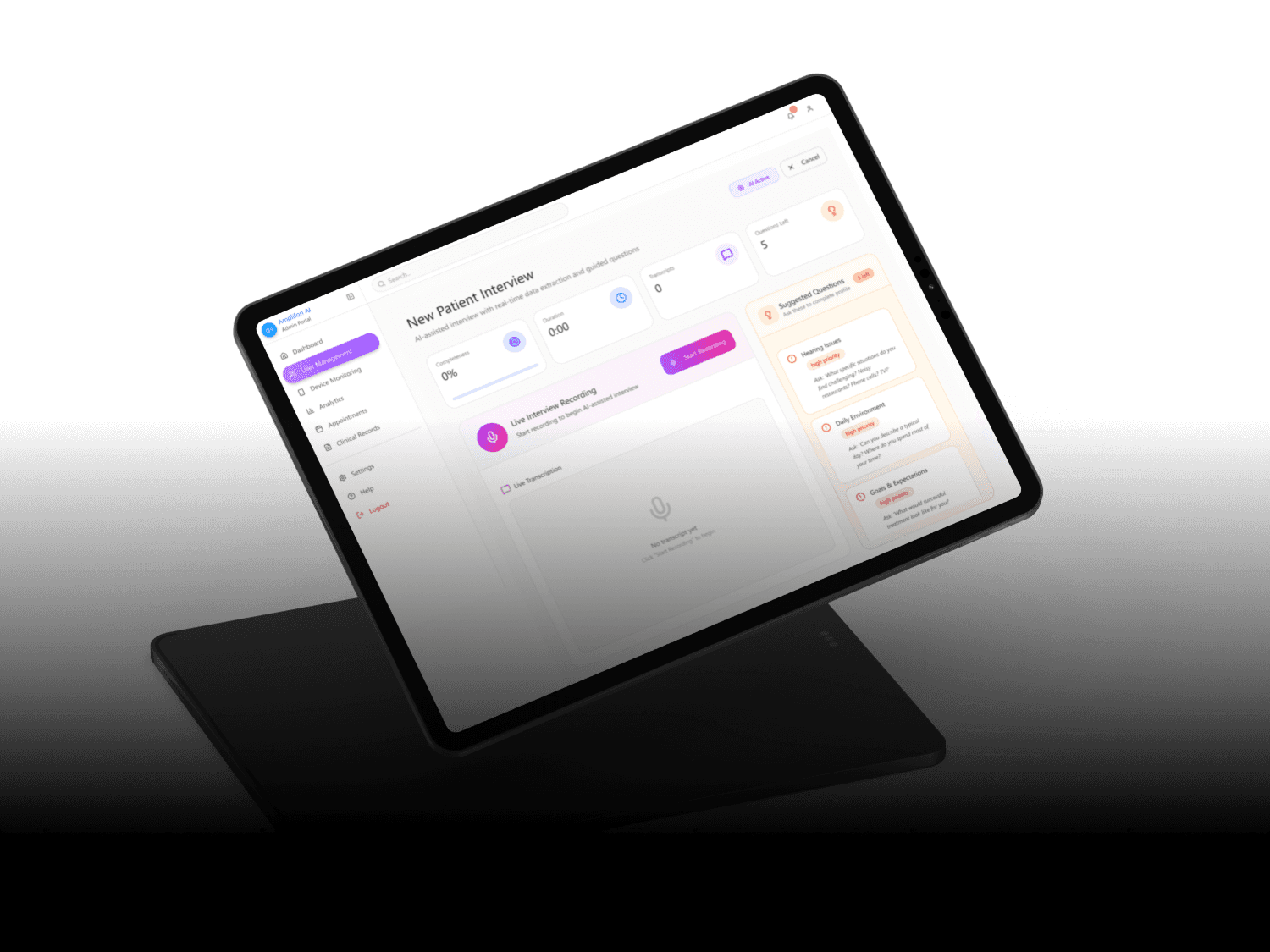
I redesigned and recreated the whole user journey, in this version The admin platform takes the patient’s interview, organizes everything automatically, and turns it into a clear, structured profile. It helps clinicians catch missing information, avoid mistakes, and build a reliable foundation for accurate tuning and long-term personalization.
AI-Guided Interview System
Impact: Clean, reusable, standardized data that finally enables long-term personalization.
Coverage & Completeness Engine
Impact: Zero skipped questions → complete intake every time.
Structured Patient Profile
The personalization backbone instead of free-text chaos.
Linear-Inspired Admin UI
Faster workflows, lower cognitive load, consistent data across clinics.
Innitial Step
The specialist fills the form with mandatory data from the patient like name, contact, medical history, and…
this part is handled by human to prevent errors.
AI instead of Human Notes
The first touch point is the interview, in the traditional way human specialist took notes of the interview and import the text by typing and storing.
Now AI listens, transcribes the dialogue, keeping them ready for the next steps of the process.
AI-assisted interview
Meanwhile, during the interview process, the AI agent starts sorting the collected data into categories, which will be helpful for personalization, support, and calibration of the devices.
At the same time, it provides suggested questions to ensure we cover all the necessary aspects and information for a seamless, user-centered, empathic, and data-driven user experience.
User Platfrom V2
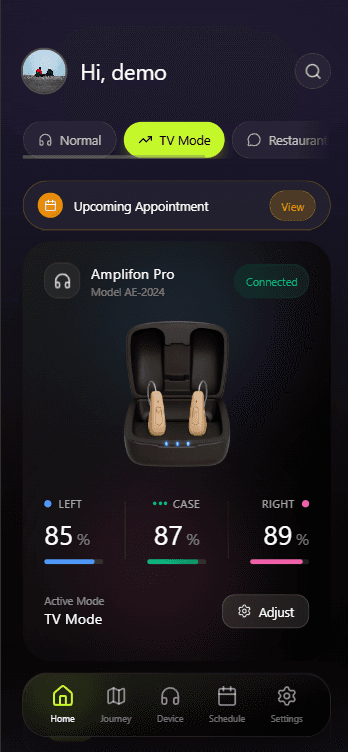
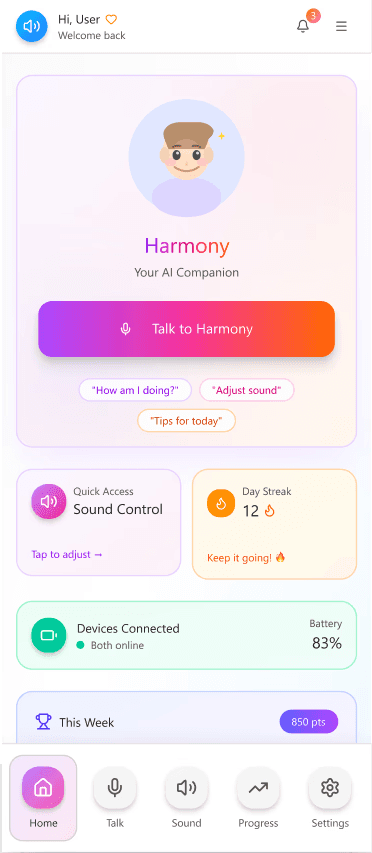
The user platform guides patients through their hearing-aid journey with a friendly, AI-driven empathic companion that explains what to do, checks in daily, and helps them adapt comfortably. It reduces confusion, supports them emotionally, giving personalized advices and messages, and makes calibration and progress easier without needing constant clinic visits.
AI Companion
Value: Reduced fear → higher compliance → lower abandonment.
Personalized Onboarding Plan
Value: Users understand “what to test” → trial week success increases.
Daily Comfort/Clarity/Fatigue Check-Ins
Value: Fewer unnecessary clinic visits → faster adaptation.
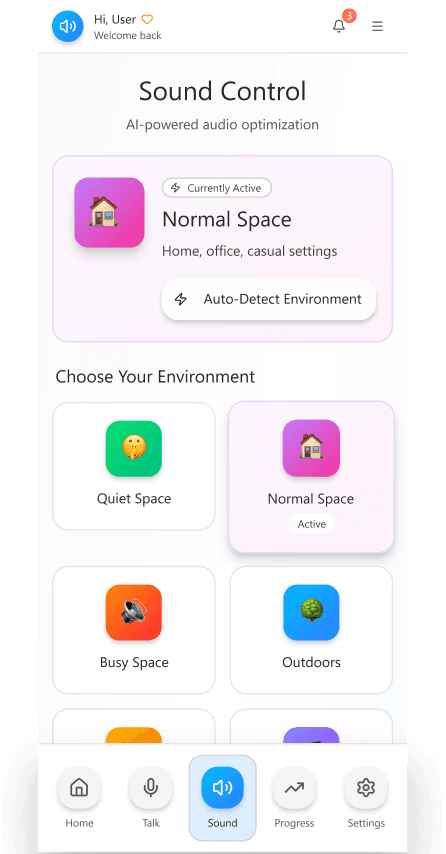
In-App Auto Calibration
Value: Operational efficiency + reduced workload for clinics.
Context-Aware Personalization
Daily moments feel supported → retention increases.

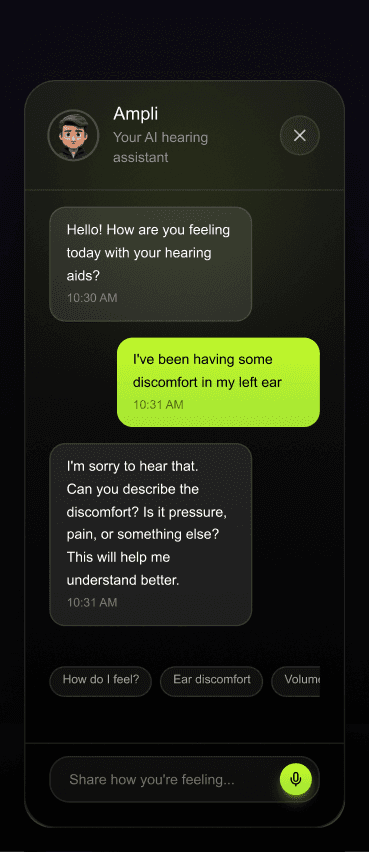
Hi Megan, How are we doing today?
The onboarding journey can be fully personalized using interview insights and extracted data, tailored to factors like age, gender, lifestyle, and more. Users can create, name, and engage with an AI companion that checks in, converses, and provides the empathetic, emotional support often missing in standard app interactions.
Smart Search
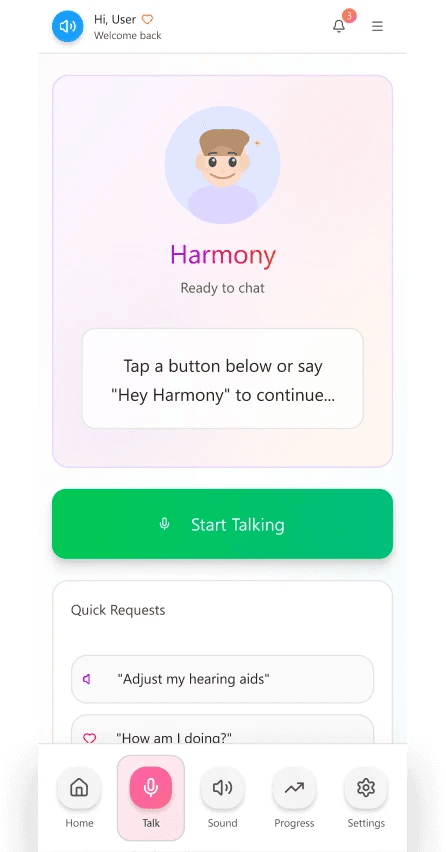
The AI companion is embedded directly into the core of the app, especially in features like smart search. Whether through voice or text, it can scan all relevant data, execute tasks on the user’s behalf, or guide them step-by-step to the right action.
For example: ask, “How can I reset my settings?” and it immediately leads you to the exact place or handles the action if possible.
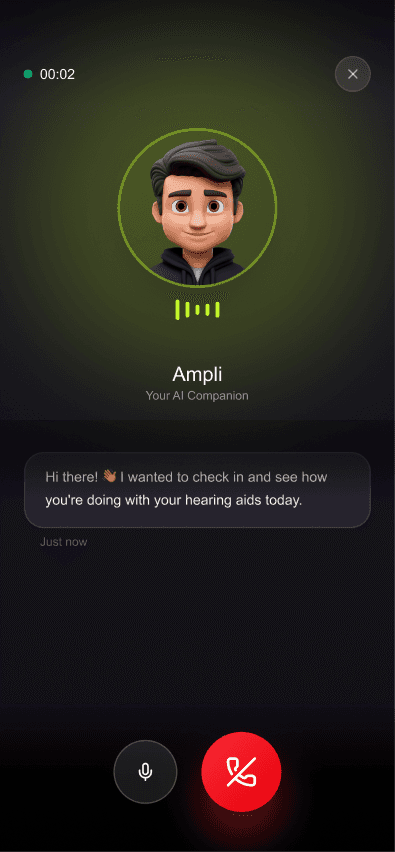
Lets have a talk!
The feature moves from simple, empathetic conversations about the user’s struggles to tailored recommendations, daily micro-tasks, and guidance that speeds up their adaptation to the device. It uses behavioral signals and extracted data to deliver targeted suggestions, making the overall experience smoother, more supportive, and genuinely user-centered.
The Call
The feature activates automatically based on behavior signals, satisfaction levels, and retention patterns. Its job is to detect user struggles, surface issues early, and deliver tailored feedback that smooths the entire experience. It boosts motivation, reassures users they’re supported, and encourages ongoing interaction with the companion. It also helps parents guide their children’s device use, and gives less tech-confident elderly users a simpler, more effortless journey.
Prototyping
I leveraged Cursor, MCP servers, and Figma Make for rapid prototyping, enabling a proof of concept and quick A/B and usability testing. Based on the insights gathered, I iterated on the design to address pain points, optimize user flows, and improve overall usability, then developed the refined, high-fidelity prototype in Figma ready for stakeholder review and further development.
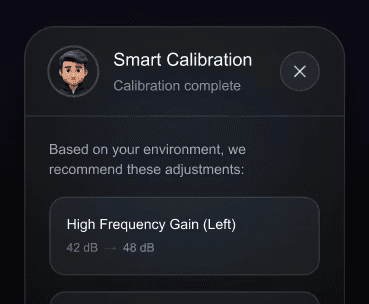

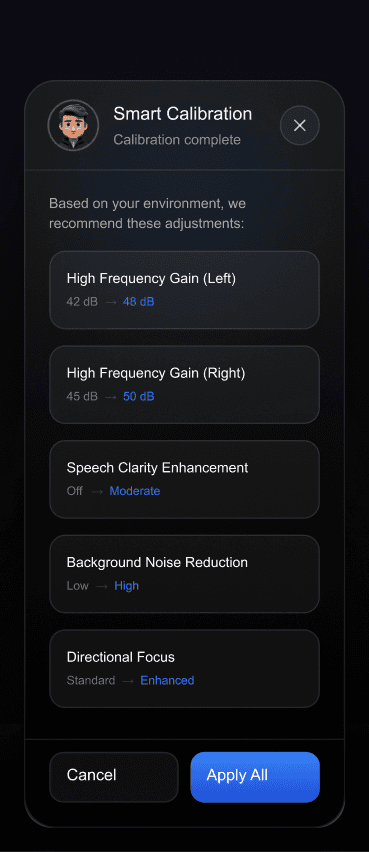
Smart Calibration
Analyzes fitting, environment, and user preferences, recommends personalized adjustments tailored to each situation.
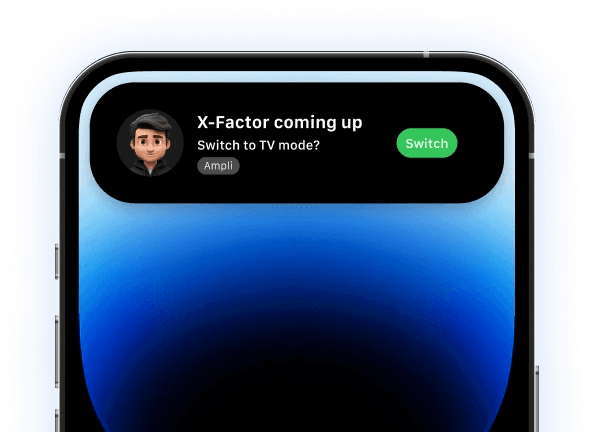
Personalized Suggestions
Delivers tailored recommendations based on user behavior, extracted data, and lifestyle patterns, ensuring a more personalized experience.
Smart Journey
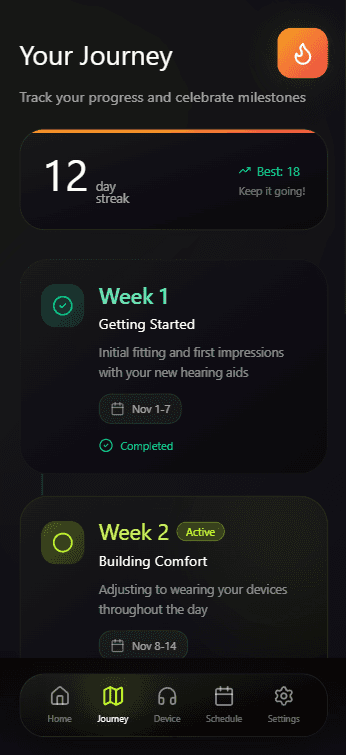
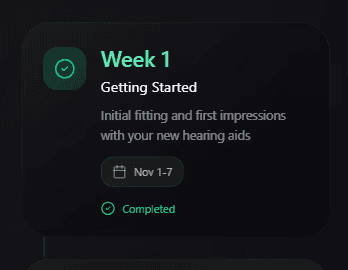
A personalized journey built from the interview results, the user’s lifestyle, shaping an experience reflecting their daily life.
Admin Side Impact
100% complete, structured interviews Higher tuning accuracy Less manual work Consistent data across clinics
User Side Imapcts
Reduced anxiety Faster adaptation Fewer clinic visits Clearer guidance Higher long-term satisfaction
Business Imapcts
Higher conversion Higher retention Lower support cost Long-term personalization capabilities
Tech and Tools
Safety: Human-in-loop approval, conflict detection, completeness scoring
Tech and Code
GitHub
Cursor
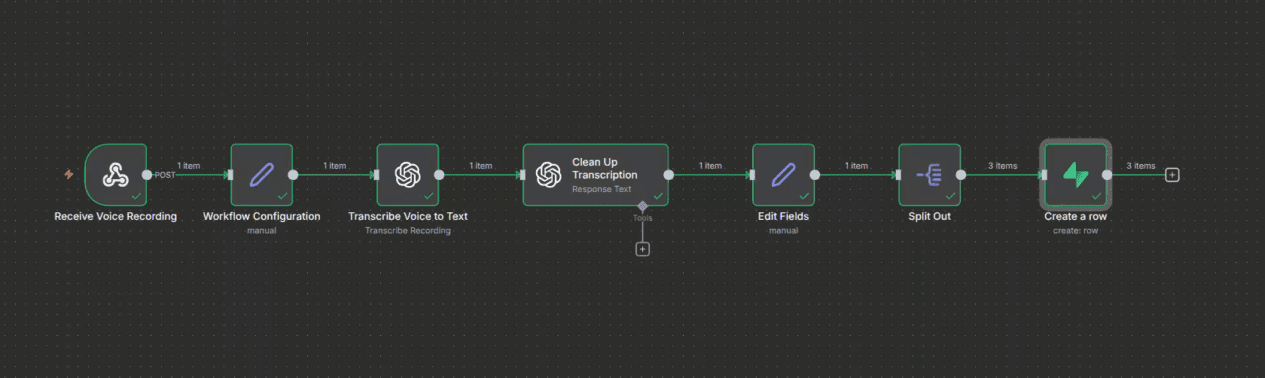
n8n
Chatgpt
Supabase
Elevenlabs
Figma Make
MCP Server
8


Media & Design
Figma
Figjam
Miro
NanoBanana
VEO3
Higgsfield
MidJourney
7
TL;DR
I redesigned Amplifon’s hearing-aid experience by replacing a broken, manual interview workflow and an overwhelming user journey with a two-sided AI-powered platform:
a structured clinical intake system and a voice-first companion app.
This redesign improves accuracy, reduces clinic visits, supports elderly users emotionally, and establishes a long-term personalization backbone across the full hearing lifecycle.